


If you live in Australia, you know our summers get HOT! Our warmer months come with humidity, summer insects, and most importantly- the longer days which make it the perfect time to travel.
Whilst holidays are a time to relax and unwind, travelling with young children can be a whole other story! What is meant to be a relaxing experience, can often be a more stressful one! You have to:
- make sure the kids are safe,
- constantly keep them entertained,
- make sure you’ve packed enough spare change of clothes (and nappies!),
- remember to keep reapplying their sunscreen,
- pack an endless supply of food for their holiday munchies (and make sure it doesn’t go off in the heat!)
And the list goes on!
Whilst we cannot ease ALL these stresses of travelling with babies and toddlers, this blog will equip you with everything you need to know about safely storing breast milk and food for bubs whilst travelling in the summer heat.
Storing food in the summer heat
As nasty as it sounds, warm weather and environments are the perfect conditions for bacteria and other microorganisms to contaminate and grow in our food. Babies and toddlers are particularly vulnerable to foodborne illnesses as their immune systems are not yet fully developed.
This can make storing food that little bit trickier, especially when travelling and on the road.
Before travelling, there are a few things to consider:
- What mode of transport are you travelling in?
- What storage facilities do you have access to?
- What shops do you have access to?
- Can you readily get ice?
- How long will you be on the road for each day?
But don’t fear- cooler bags, ice bricks and frozen water bottles are about to become your best friends!

Safely storing breast milk when travelling
You may find yourself needing to express some breast milk whilst travelling. Expressing and feeding bub from a bottle can be handy when you’re on the go.
The good news is that breast milk can come travelling with you! But there are some steps you need to take to ensure it stays safe for bub.
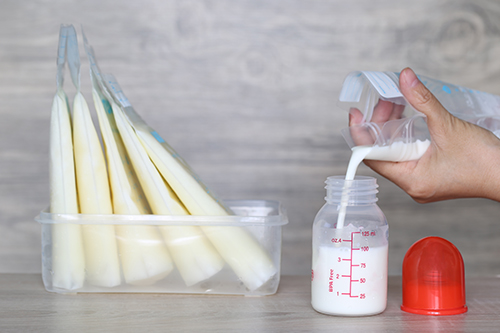
After you have expressed, it is best to store your breast milk in a sterile container or a special breast milk storage bag. You’ll be able to find these bags at most pharmacies along the way if run out whilst on the road.
If you’re not using the expressed breast milk straight away, it needs to be refrigerated or frozen. Below are the guidelines for how long you can safely store freshly expressed breast milk at different temperatures:
- at room temperature (below 26ºC) for 6-8 hours
- in the fridge (below 5ºC) for up to 72 hours
- in the freezer compartment inside a fridge (below -15ºC) for 2 weeks
- in the freezer section separated from the fridge (below -18ºC) for 3 months
- in a chest freezer (below -20ºC) for 6-12 months
No matter how long your trip is, rest assured you can bring expressed breast milk with you.
So how exactly can you keep breast milk at these safe temperatures when travelling?
FREEZER BRICKS!
If you’re on the road for hours, placing your breast milk in an esky or cooler bag with one or more freezer bricks is your best bet for storing the milk safely. Once you have arrived at your destination, you can then store them in the fridge, or the freezer if they manage to stay frozen during the trip.
Frozen breast milk can be thawed in the fridge for up to 24 hours, but should never be refrozen. If your baby doesn’t finish their feed of expressed breast milk, you should throw the remainder away rather than use it for another feed.
Safely storing baby food when travelling
Travelling with a baby may feel overwhelming enough, but making sure all their food is safely stored can be an added stress. But with these practical tips, you’ll have it down pat in no time Mumma/Dadda!
Which food to bring?
- If your baby is early in their solids journey, you may find baby led weaning to be a more practical, time-saving and easier way to feed your baby on the go. These foods may also be more readily accessible when you’re travelling.
- Pack/buy foods that your baby has eaten before- you don’t want the added stress of introducing new foods and looking for reactions when travelling.
- Foods with higher water content can also help keep your baby hydrated during the hotter days. These can include cucumber, watermelon, pineapple and corn.
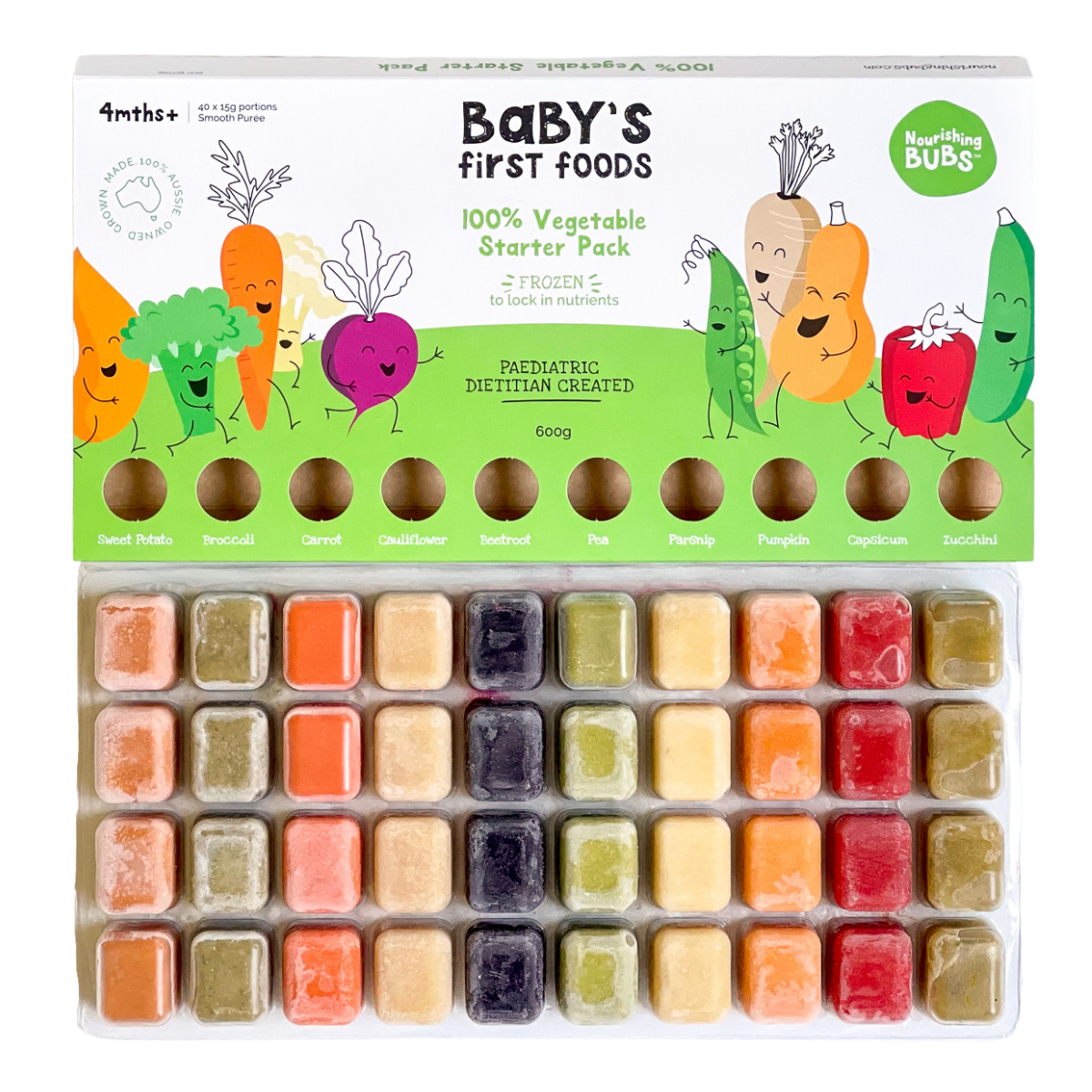
- Purees can be safely stored in an esky with ice bricks, and then a freezer when you have arrived at your destination. Our Nourishing Bubs fruit, vegetable and protein cubes are conveniently designed and packed to bring along with you on your travels. You can view and shop the range here: https://www.nourishingbubs.com/collections/all
How to pack/store baby food
The best way to keep baby food refrigerated on the go is to create a makeshift mini fridge. Here are our top tips to becoming a packing pro on holidays:
- Pack foods directly from the refrigerator to the cooler bag.
- Use clean insulated cooler bags or an esky to transport your goods.
- Only packed cooked foods once they have fully cooled.
- Line the bottom with freezer bricks or ice gels.
- Frozen water bottles/drinks also make for easy freezer bricks. You can then also enjoy a cool drink once they have defrosted.
- Ensure all your baby food is placed in separate sealed containers.
- Keep any meat and poultry in a separate bag from food that will be eaten raw (e.g fresh fruit and veg)
- Empty milk cartons also work as a great way to store ice. Simply clean them out and pre-freeze blocks of ice before leaving.
- A full cooler will stay colder than a partially full one. If your cooler still has some space, add in some extra ice cubes or non perishables like peanut butter to fill the space.
- Wrap your bag/esky in a bath/beach towel for more insulation
- If you’re travelling by car, try and store the esky inside the car with the air conditioning, as opposed to the trunk.
Remember to read the label and follow the storage instructions of any packaged baby food you bring. These instructions will help you choose whether it’s safe to give to bub or not.
How long can I store food outside of the fridge?
A general rule of thumb is that food should be eaten within 4 hours of being outside the fridge.
Food is considered to be in the ‘danger zone’ when placed in temperatures between 5ºC and 60ºC. This is why cold foods must stay cold, and hot foods must be served hot.
If you are holidaying by the beach or enjoying a picnic, aim to keep your cooler bag/esky of food away from direct sunlight. Beach umbrellas are great for this!
The two-hour/four-hour rule is a useful guide to know which action to take if perishable foods are placed in the temperature danger zone.

If you ever have any doubt, throw it out. It’s not worth the risk.
Let Nourishing Bubs take care of your baby’s needs this summer. Our fruit, vegetable and protein cubes are conveniently designed to make travelling a breeze. Each delivery is packed with insulated freezer bags that you can re-use and take travelling with you. Once defrosted, they can also be stored in the fridge for up to 3 days.
Add some to your shopping cart before taking off on your summer holiday! https://www.nourishingbubs.com/collections/all